Calm, focused attention
A settled state in which it is easier to hold one thing in mind. Some people describe it as similar to being absorbed in something; others simply as quiet.
Step by step
What happens, in what order, and why. Every individual's experience differs, so treat this as the shape of the process rather than a script that will be followed exactly.
Step 01
Before any technique is discussed, there is a conversation about what brought you here.
This is the least dramatic and most important part of the process. You describe the pattern in your own words — what happens, when, how long it has been going on, what you have already tried and how that went. Questions are asked to understand the sequence rather than to assess or grade you.
It is also where the practical questions get answered: what hypnotherapy is, what it is not, what would be involved, and whether it is a reasonable option for your situation at all. If the honest answer is that another form of professional support should come first, that is what you will be told.

Step 02
A goal that has been examined is considerably more useful than one that has only been assumed.
Most people arrive with a broad aim — to stop doing something, or to have more control. Those are starting points rather than workable objectives. This stage turns them into something specific enough to notice progress against: not “eat better”, but something closer to “get through the evening without the automatic part happening”.
It also surfaces a question worth asking early: is this goal yours? Aims adopted from a family member, a partner, a comment or a comparison rarely hold up, and it is far better to find that out at the beginning than after several sessions.

Step 03
Narrowing a broad description down to a specific, recognisable sequence.
Working through recent, concrete occasions — not a general summary of “how things usually are” — the aim is to establish what reliably precedes the behaviour. The hour. The room. The feeling. What had happened earlier in the day. What the eating appeared to be doing.
People frequently find this stage the most revealing part of the process, and it often happens partly in ordinary conversation and partly in a relaxed, focused state where recall of detail tends to be easier.
Step 04
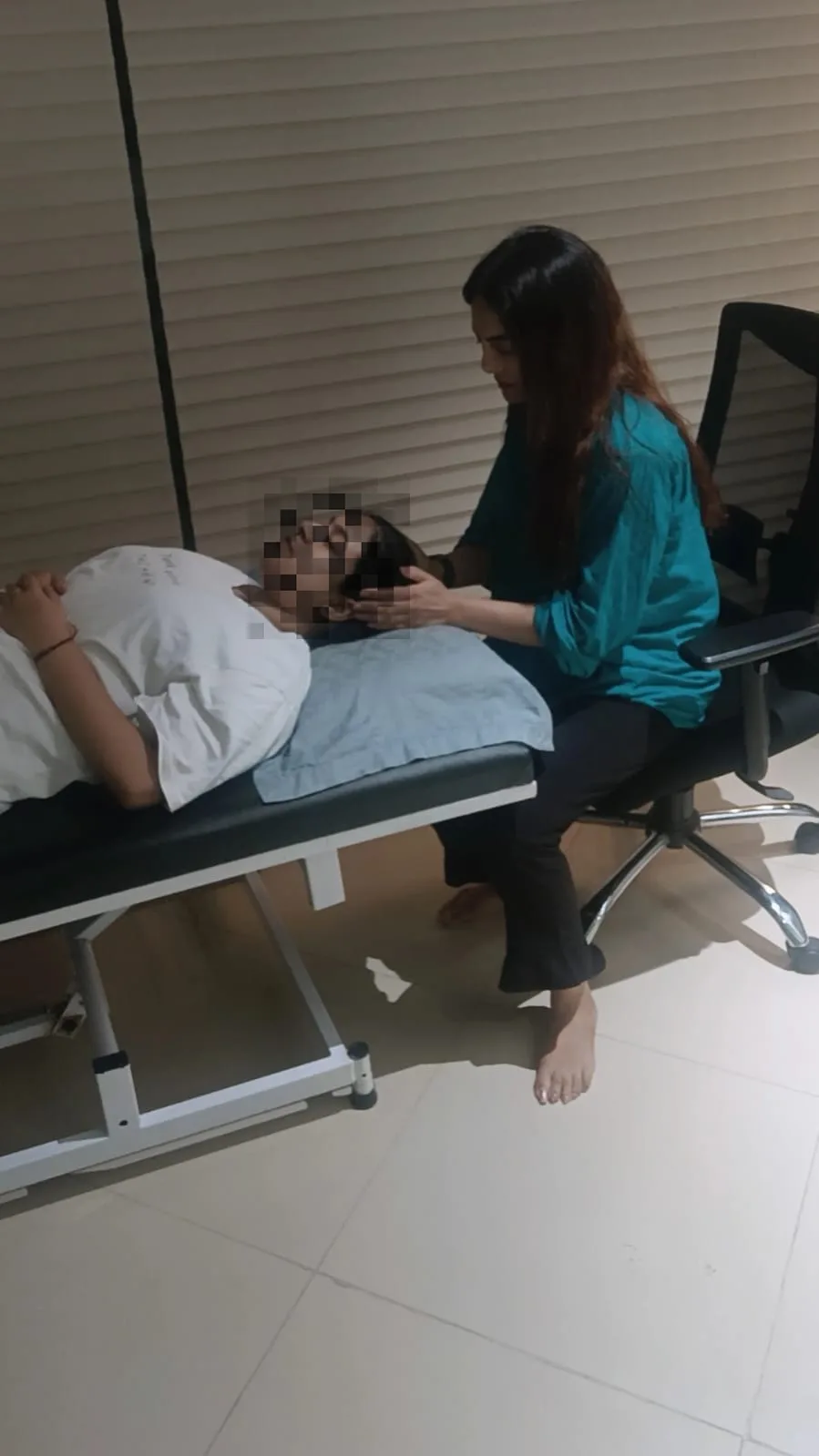
Guided relaxation and focused attention, shaped around what has been established — not read from a standard script.
The structure is usually recognisable: settling and relaxing, a period of focused work, and a return to ordinary alertness. Within that, the content is specific to you. Suggestions use your own words and your own goals wherever possible, and mental rehearsal is built around the actual situations you have described rather than generic ones.
You remain aware throughout. You can speak, move, ask to stop, or decline a suggestion at any point. Most people describe the experience as deeply relaxed and unusually focused at the same time — but experiences differ, and there is no correct way to feel.
Step 05
What actually changed, what did not, and what would genuinely be useful next.
Afterwards there is time to talk about how the session felt and what you noticed. Between appointments, what tends to matter most is simple observation — whether the pattern showed up, whether it was noticed earlier than before, whether anything was different.
Progress is rarely a straight line. A week where nothing shifted is information, not failure, and it usually points to something worth adjusting. How many sessions are useful, and whether to continue at all, is discussed openly and reviewed as you go rather than fixed in advance.
During the session itself
Descriptions vary widely from person to person, and from one session to the next for the same person. These are experiences that are commonly reported — not a list of things you should expect to feel.
A settled state in which it is easier to hold one thing in mind. Some people describe it as similar to being absorbed in something; others simply as quiet.
Muscles releasing, breathing slowing, a sensation of heaviness or lightness. For some people this is the most noticeable part of the whole session.
Recalling more of a situation than usual — the sequence, the timing, the feeling that preceded it.
Connections between things that had not previously been linked. This can be unremarkable, or it can be the most significant moment of the session.
Language directed towards what you have said you want, offered as suggestion rather than instruction, and easy to decline if it does not fit.
Some people report that it simply felt like sitting quietly with their eyes closed. This is a perfectly normal experience and does not mean the session was ineffective.
Not everyone experiences the same thing. There is no correct depth, no correct sensation and no test being passed. If you feel little, that is not a failure on your part, and it does not mean the process cannot be useful.
Setting expectations
To confirm arrangements for your own appointment, please call or email using the details on the contact page.
Ready when you are
You can ask as many questions as you like before deciding whether to go any further.