No shame, in any direction
Your body, your weight, your eating and your history are not treated as failures to be corrected. Nothing useful has ever come from a person feeling smaller at the end of an appointment than they did at the start.
The practitioner
Supporting individuals in understanding the deeper patterns that can influence habits, emotions, confidence and behaviour.
Two people can describe the same difficulty with food in almost identical words and be talking about entirely different things. One is exhausted. One is lonely. One has been dieting since their teens. One simply eats without noticing. The words match; the pattern underneath does not.
That observation sits at the centre of how Vibha Jain works. Across more than fifteen years of practice and over 2,400 sessions, the most consistent finding has been how rarely a standard approach fits a specific person. What helps someone understand their own pattern is usually particular to them — to their history, their pressures, their environment and what the behaviour is quietly doing for them.
Sessions are therefore built from listening first. There is no assumption about what a person should weigh, eat, want or feel guilty about. There is no lecture about willpower. There is a conversation, and then a considered decision about whether hypnotherapy is a sensible supportive option — and, just as importantly, whether it is not.
The aim is not to make food the enemy. It is to make the pattern visible enough that you can decide what you want to do with it.

Experience and approach
More than 2,400 sessions matters less as a number than as exposure. It means having sat with the quiet client and the talkative one, the person who arrived certain and the person who arrived sceptical, the pattern that shifted quickly and the pattern that did not shift at all. That range is what makes it possible to recognise early when an approach is not the right fit.
The guided part of a session is often the shortest part. What precedes it — the questions, the timeline, the small details about when and where and after what — is what determines whether the session is useful. Skipping that step to get to the interesting bit is the most common way hypnotherapy is done badly.
A person who feels judged will tell you a tidier version of their week. That tidier version is useless. Establishing enough trust that someone can describe an evening honestly — including the parts they have never said out loud — is not politeness; it is the precondition for the work being worth anything at all.
Some of what people bring is not a hypnotherapy question. Recognising that early, saying so plainly, and pointing towards the right kind of professional is a more valuable service than an enthusiastic session that was never going to address the real issue.
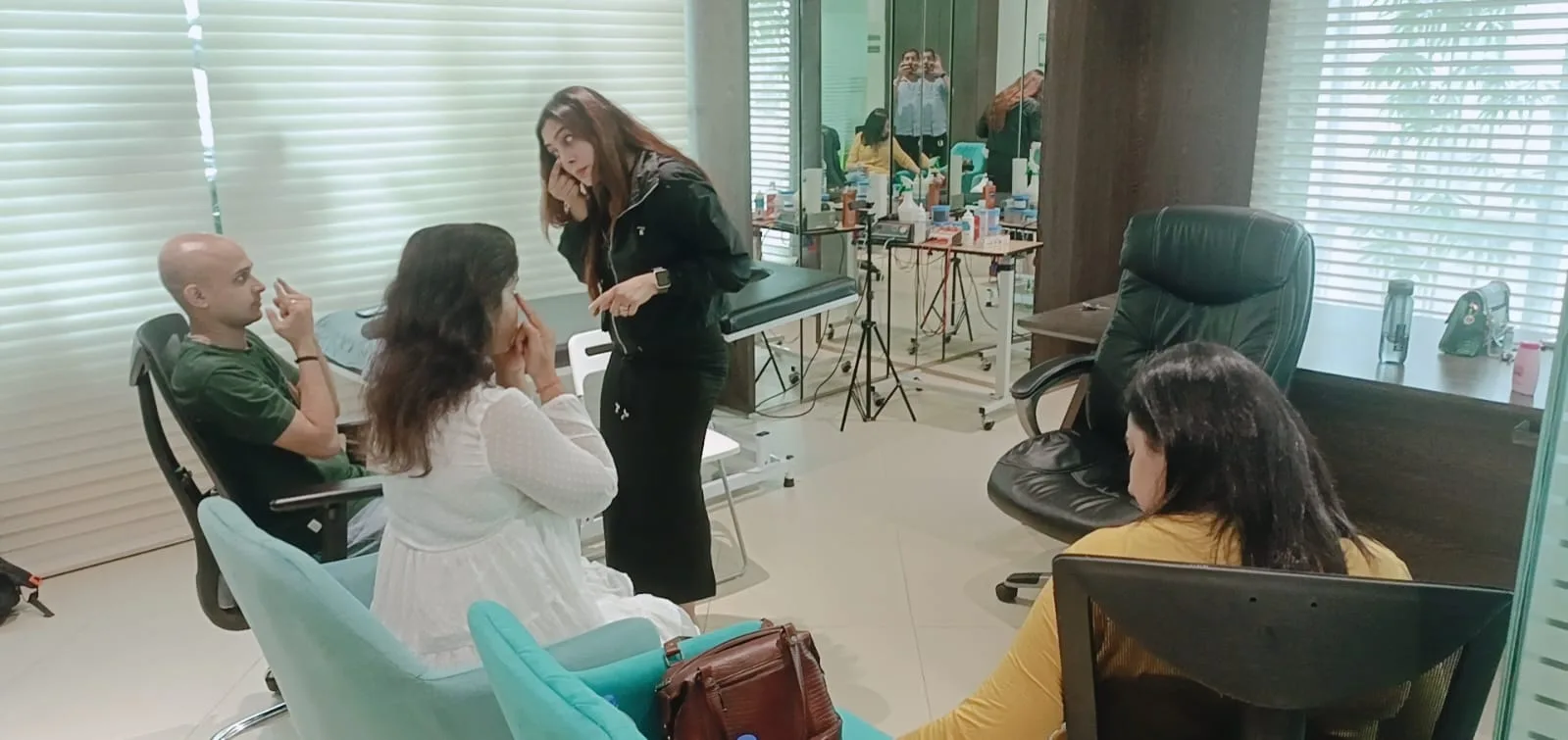
Understanding individual patterns
A relationship with food is assembled over a lifetime, out of things that had nothing to do with food at the time. A household where meals meant safety. A period of study where eating was the only reliable break. A stretch of illness. A year of shift work. A comment made once, at fifteen, that never quite left.
None of that shows up on a plate. It shows up in timing: which hour, which room, which mood, which day of the week. Two people can eat the identical thing at the identical moment for opposite reasons — one to feel something, one to stop feeling something.
This is why a one-size-fits-all approach so often disappoints. A programme built for the average person is, by definition, built for nobody in particular. The work of a first session is to establish which specific pattern is actually present, before deciding what — if anything — would help.
A personalised and respectful approach
Your body, your weight, your eating and your history are not treated as failures to be corrected. Nothing useful has ever come from a person feeling smaller at the end of an appointment than they did at the start.
Some people want to move quickly; others need several conversations before anything else. Neither is treated as a problem, and nobody is pushed towards a number of sessions they did not choose.
What is discussed in a session stays in the session. Photographs used on this website show identifiable clients only where their faces have been obscured, and nothing personal is published without consent.
No guaranteed outcomes, no promised timelines, no claims that hypnotherapy can cure a condition. What is offered is a considered process and an honest read on whether it is likely to be worth your time.
What clients can expect
People often arrive with a picture assembled from films and stage shows. The reality is considerably more ordinary, and most people find that reassuring rather than disappointing.

Important boundaries and responsible care
Being clear about limits is not a disclaimer added at the bottom of a page. It is part of practising responsibly, and it belongs in the middle of the conversation.
If your eating is affecting your health. Significant or unexplained weight change, physical symptoms, or eating patterns that are affecting your daily life, mood or relationships deserve proper medical attention. Please speak with a doctor or a mental health professional. That is not a redirection away from support — it is the right first step.
Start with a conversation
An initial conversation carries no obligation. If hypnotherapy is not the right fit for your situation, you will be told so plainly.